We Use CookiesWe use cookies to enhance the security, performance, functionality and for analytical and promotional activities. By continuing to browse this site you are agreeing to our privacy policy

10 Best Vegetable Garden Fertilizers 2026 in the United States
How do we rank products for you?

Our technology thoroughly searches through the online shopping world, reviewing hundreds of sites. We then process and analyze this information, updating in real-time to bring you the latest top-rated products. This way, you always get the best and most current options available.

headphones-stars

Our Top Picks

#1

Winner

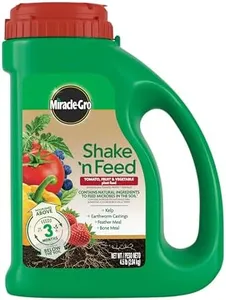
Miracle-Gro Shake 'N Feed Tomato, Fruit & Vegetable Plant Food, 4.5 lb.

Rating
10.0
Chosen by1,238
Slow-Release vs. Quick-Release
Organic vs. Synthetic
Micronutrients

Most important from
10734 reviews

Slow-Release vs. Quick-Release
Nutrients release slowly over up to three months, reducing the need for frequent reapplication.
Organic vs. Synthetic
Added natural ingredients like kelp, earthworm castings, and feather meal help nourish the soil and plants.
Micronutrients
The formula includes micronutrients that contribute to the well-rounded nutrition of fruits and vegetables.

Miracle-Gro Shake 'N Feed Tomato, Fruit & Vegetable Plant Food is a slow-release fertilizer designed to feed outdoor vegetables and fruits, including tomatoes, for up to three months. Its N-P-K ratio of 10-5-15 provides a higher amount of potassium, which supports fruit and vegetable development, making it well-suited for those crops. The inclusion of calcium is a notable strength, as it helps strengthen plant cell walls and reduces common calcium deficiency issues like blossom end rot in tomatoes. This product contains natural ingredients like kelp, earthworm castings, feather meal, and bone meal, which nourish soil microbes and improve root health, resulting in better water use and overall plant vigor.

Since it is a slow-release granule, it avoids the risk of quick nutrient burn, allowing for a steady nutrient supply without frequent reapplication beyond every three months. However, it is a synthetic blend with added organic materials rather than a fully organic fertilizer, so those strictly wanting organic-only products might want to consider alternatives.

Application is straightforward—sprinkle on soil and water in—making it user-friendly for both potted plants and garden beds. This fertilizer is a dependable choice for gardeners seeking an easy-to-use, long-lasting option that supports fruit and vegetable growth with added calcium and beneficial micronutrients.

Rating
10.0
Chosen by1,238
Slow-Release vs. Quick-Release
Organic vs. Synthetic
Micronutrients

Most important from
10734 reviews

Slow-Release vs. Quick-Release
Nutrients release slowly over up to three months, reducing the need for frequent reapplication.
Organic vs. Synthetic
Added natural ingredients like kelp, earthworm castings, and feather meal help nourish the soil and plants.
Micronutrients
The formula includes micronutrients that contribute to the well-rounded nutrition of fruits and vegetables.
#2

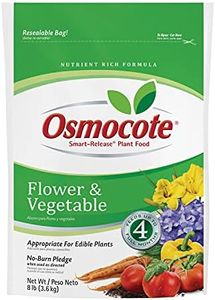
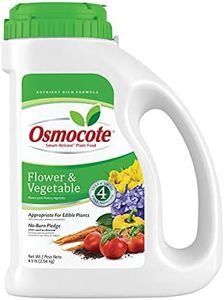
Osmocote Smart-Release Plant Food Flower & Vegetable - Continuous Release Plant Fertilizer for Vegetables and More, 8 lb.

Rating
10.0
N-P-K Ratio
Slow-Release vs. Quick-Release

Most important from
7998 reviews

N-P-K Ratio
Plants show noticeably greener leaves and faster growth with minimal effort.
Slow-Release vs. Quick-Release
The slow-release formula means you can apply once and water, without constant fertilizing.

Osmocote Smart-Release Plant Food offers a balanced 14-14-14 NPK ratio, providing equal amounts of nitrogen, phosphorus, and potassium. This makes it suitable for promoting strong roots and healthy, vigorous growth in a wide range of vegetables and flowers. It is a synthetic fertilizer that uses a slow-release formula, meaning nutrients are gradually available to plants over time. This slow release is controlled by soil temperature, helping avoid nutrient burn even if accidentally applied in higher amounts.

The product comes in granule form, is easy to apply with the included scoop, and covers a fairly large area (320 sq. ft. per 8 lb bag). Osmocote’s long testing history adds confidence in its reliability across different climates and soils. It is not organic, which might matter if you prefer natural or chemical-free gardening.

This fertilizer is a strong choice for gardeners wanting a straightforward, low-maintenance solution for vegetable beds and flower gardens that benefits from steady nutrient feeding without frequent applications.

Rating
10.0
N-P-K Ratio
Slow-Release vs. Quick-Release

Most important from
7998 reviews

N-P-K Ratio
Plants show noticeably greener leaves and faster growth with minimal effort.
Slow-Release vs. Quick-Release
The slow-release formula means you can apply once and water, without constant fertilizing.
#3

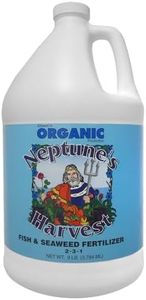
Neptune's Harvest Fish & Seaweed Liquid Fertilizer (2-3-1) - 1 Gallon Bottle - Plant Food for Garden - Indoor & Outdoor Organic Plant Fertilizer for Vegetables, Flowers, Fruit, and Lawns

Rating
9.1
Organic vs. Synthetic
Slow-Release vs. Quick-Release

Most important from
7147 reviews

Organic vs. Synthetic
Its natural blend of fish and seaweed delivers essential nutrients that promote strong roots, vigorous growth, and prolific flowering and fruiting.
Slow-Release vs. Quick-Release
The liquid form is easy to apply and quickly absorbed, making feeding straightforward and effective.

Neptune's Harvest Fish & Seaweed Liquid Fertilizer is an organic liquid fertilizer with an N-P-K ratio of 2-3-1, which means it has a moderate amount of nitrogen, a bit more phosphorus, and a lower potassium level. This balance supports strong root and flower development, which is great for vegetables, flowers, fruit, and lawns. Since it’s made mostly from hydrolyzed fish and seaweed, it provides natural micronutrients and beneficial compounds that improve soil health over time by feeding helpful bacteria and loosening soil structure. Being organic, it’s safe for kids, pets, and the environment. It works as a quick-release fertilizer since it’s liquid and easily absorbed by plants, making it suitable for regular feeding through soil or foliar sprays. The product is versatile, fitting well into indoor and outdoor gardening routines.

The relatively low nitrogen and potassium may mean it’s less effective if your plants need a strong growth boost or high fruit production. Also, because it’s a liquid fertilizer, it requires frequent application compared to slow-release granular options. Its slightly acidic nature fits well with most garden soils but if your soil is extremely alkaline or acidic, you might want to test compatibility. This fertilizer serves as a solid choice for gardeners looking for a natural, safe, and balanced option that supports plant health and soil quality rather than a quick fix for nutrient deficiencies.

Rating
9.1
Organic vs. Synthetic
Slow-Release vs. Quick-Release

Most important from
7147 reviews

Organic vs. Synthetic
Its natural blend of fish and seaweed delivers essential nutrients that promote strong roots, vigorous growth, and prolific flowering and fruiting.
Slow-Release vs. Quick-Release
The liquid form is easy to apply and quickly absorbed, making feeding straightforward and effective.

Buying Guide for the Best Vegetable Garden Fertilizers

Choosing the right fertilizer for your vegetable garden is crucial for ensuring healthy plant growth and a bountiful harvest. Fertilizers provide essential nutrients that plants need to thrive, and selecting the right one can make a significant difference in the quality and quantity of your vegetables. When picking a fertilizer, consider the specific needs of your plants, the condition of your soil, and the type of vegetables you are growing. Understanding the key specifications of fertilizers will help you make an informed decision that best suits your garden's requirements.
N-P-K RatioThe N-P-K ratio represents the percentage of nitrogen (N), phosphorus (P), and potassium (K) in the fertilizer. These are the primary nutrients that plants need. Nitrogen promotes leafy growth, phosphorus supports root development and flowering, and potassium enhances overall plant health and disease resistance. For leafy vegetables like lettuce and spinach, a higher nitrogen content is beneficial. For root vegetables like carrots and potatoes, a higher phosphorus content is ideal. For a balanced garden with a variety of vegetables, a balanced N-P-K ratio such as 10-10-10 is a good choice.
Organic vs. SyntheticOrganic fertilizers are made from natural materials such as compost, manure, and bone meal, while synthetic fertilizers are chemically manufactured. Organic fertilizers improve soil structure and provide a slow release of nutrients, which is beneficial for long-term soil health. Synthetic fertilizers offer a quick release of nutrients, which can be useful for immediate plant needs. If you prefer a more sustainable and environmentally friendly option, organic fertilizers are the way to go. However, if you need a quick boost for your plants, synthetic fertilizers might be more suitable.
Slow-Release vs. Quick-ReleaseSlow-release fertilizers gradually release nutrients over an extended period, providing a steady supply of nutrients to plants. Quick-release fertilizers deliver nutrients immediately, which can be beneficial for plants that need an instant boost. Slow-release fertilizers are ideal for maintaining consistent growth and reducing the risk of nutrient burn. Quick-release fertilizers are useful for addressing specific nutrient deficiencies or giving plants a rapid growth spurt. Consider the growth stage of your plants and your gardening schedule when choosing between these options.
Soil pH CompatibilitySoil pH affects the availability of nutrients to plants. Some fertilizers are formulated to work best within specific pH ranges. It's important to test your soil's pH before selecting a fertilizer to ensure compatibility. Most vegetables prefer a slightly acidic to neutral pH (6.0-7.0). If your soil is too acidic or too alkaline, you may need to adjust the pH or choose a fertilizer that can help balance it. Matching the fertilizer to your soil's pH will ensure that your plants can effectively absorb the nutrients provided.
MicronutrientsIn addition to the primary nutrients (N-P-K), plants also need micronutrients such as iron, manganese, zinc, copper, and boron in smaller amounts. These micronutrients are essential for various physiological functions and overall plant health. Some fertilizers include micronutrients, while others do not. If your soil is deficient in certain micronutrients, choosing a fertilizer that includes them can help prevent deficiencies and promote healthy growth. Conduct a soil test to determine if your garden needs additional micronutrients.

FAQ