10 Best Vegetable Fertilizers 2026 in the United States



Related Products

Recommended lists


Our technology thoroughly searches through the online shopping world, reviewing hundreds of sites. We then process and analyze this information, updating in real-time to bring you the latest top-rated products. This way, you always get the best and most current options available.

Our Top Picks
Winner
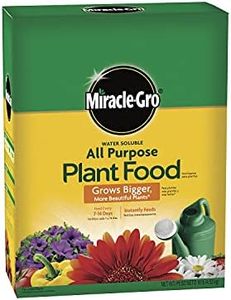
Miracle-Gro Water Soluble All Purpose Plant Food, 10 lb.
Miracle-Gro Water Soluble All Purpose Plant Food is a synthetic, quick-release fertilizer designed to feed a wide variety of plants, including vegetables, flowers, and houseplants. Its N-P-K ratio of 24-8-16 provides a high nitrogen content, which supports leafy growth—something vegetable gardeners often appreciate for healthy greens and fruiting plants.
Because it’s water-soluble and fast-acting, you can expect quicker results compared to slow-release options. This makes it handy if you want to see visible growth improvements in a short time. Being synthetic, it doesn't improve soil health long-term like organic fertilizers do. The product is easy to use with clear mixing instructions and covers a large garden area, which is convenient for both small and larger vegetable plots.
If you want an all-around fertilizer that works quickly and feeds many plant types, Miracle-Gro is a reliable choice. However, if you prefer a natural, slow-release solution that also enriches soil biology, you might want to look elsewhere.
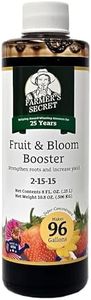
Farmer’s Secret Fruit & Bloom Booster Fertilizer - Super Concentrated - Boosts Flowering and Yield on All Varieties of Fruits, Vegetables and Flowers (32oz)
Farmer’s Secret Fruit & Bloom Booster Fertilizer is a liquid, super concentrated formula designed to enhance flowering and fruit production on a wide range of plants including fruits, vegetables, and flowers. Its strength lies in boosting root health to help plants absorb nutrients more effectively, which can lead to more abundant blooms and better yields. The product is easy to use, requiring dilution of just one teaspoon per two gallons of water, making it economical and suitable for regular feeding every 2-4 weeks.
As a liquid, it offers quick nutrient uptake and appears compatible with various soil pH levels since it works well on diverse plants like citrus, raspberries, and roses. This product is synthetic, which generally means faster results compared to organic options but might lack long-term soil enrichment. Customer feedback is very positive, indicating good results and satisfaction.
This fertilizer suits gardeners looking for a straightforward, effective booster to increase blooms and fruit yield without complex application steps. Those seeking fully organic or slow-release fertilizers for long-term soil health might want to consider alternatives.
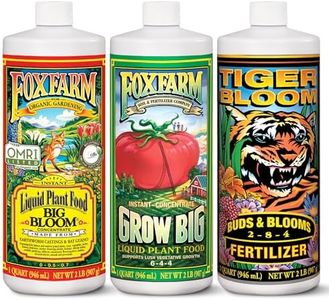
FoxFarm Soil Liquid Trio Pack - Big Bloom, Grow Big, Tiger Bloom Fertilizers Supports Vigorous Plant Growth, Bud Development & Abundant Fruit - Complete Liquid Plant Food Set - 3 Quart Bottles
Most important from
24183 reviews
The FoxFarm Soil Liquid Trio Pack offers a well-rounded fertilizer set including Big Bloom, Grow Big, and Tiger Bloom formulas designed to cover all stages of plant growth — from early development to flowering and fruiting. The trio’s N-P-K ratios vary to support specific needs: Grow Big emphasizes nitrogen for leafy growth, Tiger Bloom provides more phosphorus and potassium for buds and fruit, while Big Bloom promotes overall plant health with a gentler mix. This combination is useful for a variety of plants including vegetables, flowers, and even houseplants.
These fertilizers are liquid and quick-release, meaning plants can absorb nutrients rapidly, which is helpful if you want fast results. However, this also means you might need to apply them regularly rather than relying on a slow-release product. The Tiger Bloom fertilizer is noted for its low pH, which helps keep micronutrients stable and available to plants, an important feature since nutrient availability often depends on soil pH. While the product is not explicitly labeled organic, FoxFarm is known for avoiding harsh chemicals, making it a safer choice than purely synthetic options.
The pack is easy to use with simple mixing instructions, and the liquid form allows for even application. On the downside, since these are liquid fertilizers, they may require more frequent application compared to slow-release granules, and you should monitor soil conditions to avoid overfeeding. The trio’s versatility and tested formulas make it a reliable option for gardeners seeking a complete nutrient program to support vegetables and other plants through their entire growth cycle.