We Use CookiesWe use cookies to enhance the security, performance, functionality and for analytical and promotional activities. By continuing to browse this site you are agreeing to our privacy policy

10 Best Travel Cameras 2026 in the United States
How do we rank products for you?

Our technology thoroughly searches through the online shopping world, reviewing hundreds of sites. We then process and analyze this information, updating in real-time to bring you the latest top-rated products. This way, you always get the best and most current options available.

headphones-stars

Our Top Picks

#1

Winner

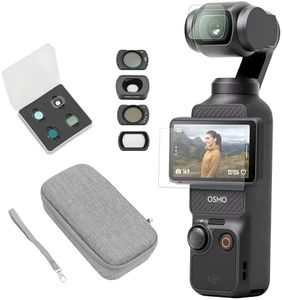
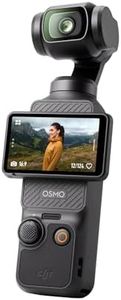
DJI Osmo Pocket 3, Vlogging Cameras with 1'' CMOS & 4K/120fps Vlog Camera, 3-Axis Stabilization, Fast Focusing, Face/Object Tracking, with Carrying Case, Screen Protector, Filter Kit

Rating
10.0
Chosen by1,337
Sensor Size
Image Stabilization
Battery Life

Most important from
6563 reviews

Sensor Size
A large 1-inch sensor dramatically enhances image clarity and low-light performance, elevating video quality beyond typical pocket cameras.
Image Stabilization
The 3-axis stabilization ensures impressively smooth videos even while walking or engaging in active travel.
Battery Life
Battery life is reliable with quick charging, supporting extended shooting sessions without frequent interruptions.

The DJI Osmo Pocket 3 is a compact and lightweight vlogging camera that fits well for travelers who want high-quality video without carrying bulky gear. It features a relatively large 1-inch CMOS sensor, which helps capture clearer and more detailed images, especially in low light like sunsets or night scenes. With 4K video recording at up to 120fps, it allows for smooth, crisp footage and slow-motion effects that make your travel clips stand out. The 3-axis mechanical stabilization is a key strength, ensuring your videos stay steady even while moving, which is great for active travel or walking tours. Its 2-inch rotating touchscreen makes framing shots easy in both horizontal and vertical formats, adding flexibility for social media sharing. The auto-focus and ActiveTrack 6.0 keep your subject sharp and centered, which is handy when filming yourself or others on the move.

Battery life and connectivity are practical for travel: it uses a single rechargeable battery and connects via USB, making charging and file transfer simple. The camera’s effective photo resolution is 9.4 megapixels, which is decent but not outstanding if you plan to print large photos. Lens options and zoom range are limited since the camera has a fixed 20mm lens without optical zoom, so it’s less suited for capturing distant subjects. While it includes useful accessories like a carrying case and filters, those wanting more flexibility with lenses or longer zoom might need a different camera.

The Osmo Pocket 3 serves as a travel-friendly, easy-to-use vlogging tool with advanced stabilization and strong video features, making it ideal for capturing smooth, vibrant clips on the go.

Rating
10.0
Chosen by1,337
Sensor Size
Image Stabilization
Battery Life

Most important from
6563 reviews

Sensor Size
A large 1-inch sensor dramatically enhances image clarity and low-light performance, elevating video quality beyond typical pocket cameras.
Image Stabilization
The 3-axis stabilization ensures impressively smooth videos even while walking or engaging in active travel.
Battery Life
Battery life is reliable with quick charging, supporting extended shooting sessions without frequent interruptions.
#2

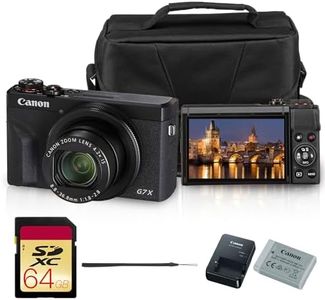
Canon PowerShot G7 X Mark III Digital Camera Bundle | 20.1MP 1-Inch Sensor, 4.2X Optical Zoom, 4K UHD Video, Wi-Fi & Bluetooth | Vlogging & Travel Camera with Bag and 64GB Card

The Canon PowerShot G7 X Mark III is a solid choice for travelers wanting a compact yet powerful camera. It features a 1-inch sensor with 20.1 megapixels, offering sharp and vibrant photos even in low light, which is great for varied travel scenes. The 4.2x optical zoom covers moderate distances, helping you capture landscapes or details without changing lenses. Canon’s lens design generally helps reduce blur, though it may not match advanced stabilization found in larger cameras.

Its compact size and lightweight design make it easy to carry around on trips. The battery life is decent for travel, and the included extra battery and charger in the bundle add convenience. One of the standout features is 4K video recording with a flip-up touchscreen—ideal for vloggers or travelers who want high-quality videos. Plus, the external microphone input enhances sound quality if you want better audio. Connectivity via Wi-Fi and Bluetooth allows quick sharing to your phone or social media, which is handy on the go.

The camera lacks a built-in flash, so shooting in very dark situations might require extra lighting. It is also not water-resistant, so extra care is needed around water. This camera suits travelers and content creators who want a versatile, easy-to-use device with strong photo and video capabilities in a small package.

#3

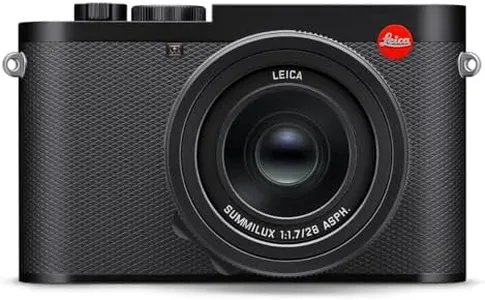
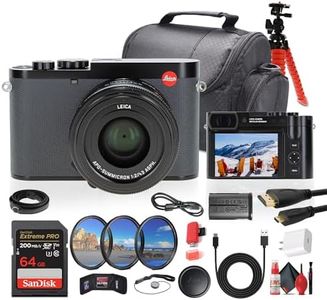
Leica Q3 Compact Digital Camera (19080) (Black)

The Leica Q3 is a premium compact camera designed for travelers who prioritize exceptional image quality and professional-level performance. Its standout feature is the full-frame 60MP BSI CMOS sensor, which captures incredibly detailed and vibrant photos, making it ideal if you want sharp, lifelike travel shots or plan to print large images. The fixed 28mm Summilux lens offers a bright f/1.7 aperture, great for shooting in varied lighting, from daytime streets to dim interiors. While it lacks multiple lens options, the 3.15x digital zoom extends framing flexibility up to roughly 90mm, but this digital zoom doesn’t replace the sharpness of optical zoom found on some other cameras. Image stabilization is digital rather than optical, so you might need a steady hand or tripod for sharper shots at longer zoom or low light.

Despite its powerful 60MP sensor and advanced hybrid autofocus with 256 points, the Leica Q3 remains relatively compact and lightweight for a full-frame camera, though at around 5 pounds it is heavier than typical travel compacts, which could be noticeable during long excursions. Battery life is decent but not exceptional; it doesn't include batteries in the box, so you should plan to carry spares for extended use. Connectivity is strong with built-in Wi-Fi and USB ports, enabling easy photo transfer and remote control via compatible phones or tablets.

The Leica Q3 is well-suited for serious photography enthusiasts or travelers willing to invest in high-quality gear to capture stunning images without the bulk of interchangeable-lens systems. Casual travelers looking for lightweight, versatile zoom lenses or longer battery life may find it less convenient compared to more traditional travel cameras.

Buying Guide for the Best Travel Cameras

Choosing the right travel camera can significantly enhance your travel experiences by allowing you to capture high-quality photos and videos of your adventures. When selecting a travel camera, it's important to consider various specifications that will impact the camera's performance, portability, and suitability for your specific needs. Here are some key specs to consider and how to navigate them to find the best fit for you.
Sensor SizeThe sensor size of a camera determines the quality of the images it can produce. Larger sensors generally capture more light, resulting in better image quality, especially in low-light conditions. Common sensor sizes include Full Frame, APS-C, and Micro Four Thirds. Full Frame sensors offer the best image quality but are usually found in larger, heavier cameras. APS-C sensors provide a good balance between image quality and portability, making them a popular choice for travel. Micro Four Thirds sensors are smaller and more compact, making cameras with these sensors lightweight and easy to carry. Choose a sensor size based on your priority between image quality and portability.
MegapixelsMegapixels refer to the resolution of the camera's sensor, indicating how many millions of pixels the camera can capture. Higher megapixels mean more detail in your photos, which is useful for large prints or cropping images without losing quality. However, more megapixels also mean larger file sizes. For most travel photography needs, a camera with 16-24 megapixels is sufficient. If you plan to print large photos or need to crop images extensively, consider a camera with higher megapixels.
Lens OptionsThe availability and versatility of lenses can greatly impact your photography. Some travel cameras come with fixed lenses, while others have interchangeable lenses. Fixed lens cameras are more compact and convenient but limit your ability to change focal lengths. Interchangeable lens cameras offer more flexibility, allowing you to switch between wide-angle, standard, and telephoto lenses based on your shooting needs. If you prefer convenience and simplicity, a fixed lens camera might be ideal. If you want more creative control and flexibility, opt for a camera with interchangeable lenses.
Zoom RangeThe zoom range of a camera determines how close you can get to your subject without physically moving. Optical zoom is more important than digital zoom, as it maintains image quality. Travel cameras often have zoom ranges from 3x to 30x or more. A higher zoom range is useful for capturing distant subjects, such as wildlife or landscapes. However, higher zoom ranges can also make the camera bulkier. Consider your typical shooting scenarios: if you often photograph distant subjects, a higher zoom range is beneficial. For general travel photography, a moderate zoom range should suffice.
Image StabilizationImage stabilization helps reduce blur caused by camera shake, which is especially useful in low-light conditions or when using a long zoom. There are two types: optical and digital. Optical stabilization is generally more effective as it physically adjusts the lens or sensor to counteract movement. Digital stabilization uses software to reduce blur but can sometimes degrade image quality. If you often shoot in low light or use long zooms, look for a camera with good optical image stabilization to ensure sharp images.
Size and WeightThe size and weight of a travel camera are crucial factors, as you'll be carrying it around for extended periods. Compact and lightweight cameras are easier to handle and less cumbersome, making them ideal for travel. However, smaller cameras may have fewer features or lower image quality compared to larger ones. Consider how much gear you're willing to carry and balance it with the camera's capabilities. If you prioritize portability, opt for a compact camera. If you don't mind carrying a bit more weight for better performance, a slightly larger camera might be worth it.
Battery LifeBattery life determines how many photos or videos you can take before needing to recharge. Longer battery life is essential for travel, especially if you won't have frequent access to charging points. Cameras with larger batteries or more efficient power management will last longer. Check the manufacturer's specifications for the estimated number of shots per charge. For extended trips, consider carrying spare batteries or a portable charger. Choose a camera with battery life that matches your travel habits and shooting frequency.
ConnectivityConnectivity features, such as Wi-Fi, Bluetooth, and GPS, can enhance your travel photography experience. Wi-Fi and Bluetooth allow you to transfer photos to your smartphone or tablet for quick sharing on social media. GPS can geotag your photos, helping you remember where each shot was taken. These features add convenience but may also drain the battery faster. If you value instant sharing and location tracking, look for a camera with these connectivity options. If you prefer to manage your photos later, these features may be less critical.

FAQ