We Use CookiesWe use cookies to enhance the security, performance, functionality and for analytical and promotional activities. By continuing to browse this site you are agreeing to our privacy policy

10 Best Thermal Image Cameras 2026 in the United States
How do we rank products for you?

Our technology thoroughly searches through the online shopping world, reviewing hundreds of sites. We then process and analyze this information, updating in real-time to bring you the latest top-rated products. This way, you always get the best and most current options available.

headphones-stars

Our Top Picks

#1

Winner

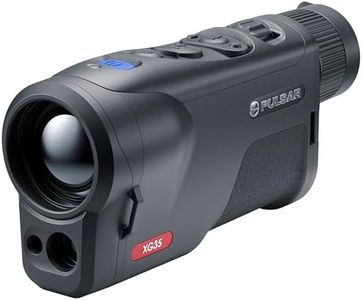
Pulsar Oryx LRF XG35 Thermal Monocular with Laser Rangefinder

Rating
10.0
Chosen by1,102
Resolution
Durability and Ergonomics

Most important from
3 reviews

Resolution
The device offers exceptional picture clarity that truly impresses.
Durability and Ergonomics
Lightweight design and one-handed operation make it uniquely easy to use in the field.

The Pulsar Oryx LRF XG35 is a high-quality thermal monocular well-suited for hunters and outdoor enthusiasts needing reliable imaging day or night. Its 640x480 resolution with a 12 µm sensor delivers sharp thermal images, and the 12.5° field of view offers a good balance between spotting detail and area coverage. The 2.5-20x magnification allows flexible viewing from close to long distances, with detection capabilities up to nearly 2,000 yards. A standout feature is the built-in laser rangefinder that measures distance up to 1,500 meters with ±1 meter accuracy, which is especially helpful for accurate target assessment.

The AMOLED display with 1024x768 resolution provides bright and clear visuals in various conditions, including fog and dense foliage. The monocular is lightweight (about 18 ounces) and portable, making it comfortable for extended use in the field. It includes standard APS 5 batteries and USB-C charging, providing convenient power options. This device delivers excellent imaging and distance measuring for serious outdoor users, catering well to those requiring reliable performance in diverse environments.

Rating
10.0
Chosen by1,102
Resolution
Durability and Ergonomics

Most important from
3 reviews

Resolution
The device offers exceptional picture clarity that truly impresses.
Durability and Ergonomics
Lightweight design and one-handed operation make it uniquely easy to use in the field.
#2

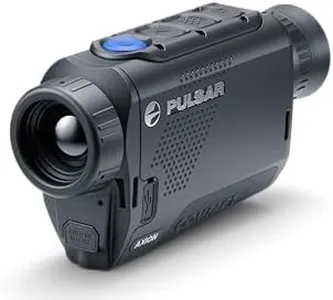
Pulsar Axion XQ19 Compact Thermal Monocular, 384x288 Sensor

Rating
9.1
Resolution
Sensitivity (NETD)
Durability and Ergonomics

Most important from
31 reviews

Resolution
This thermal monocular offers exceptional value with a 384x288 sensor and <18mK NETD at a price point rarely matched.
Sensitivity (NETD)
This thermal monocular offers exceptional value with a 384x288 sensor and <18mK NETD at a price point rarely matched.
Durability and Ergonomics
The device feels like a professional-grade tool, combining solid build quality with a lightweight design.
Display and Connectivity
The display is significantly larger and clearer than many competitors, providing a comfortable viewing experience.
Field of View (FOV)
Its large field of view and ability to track subjects through dense vegetation make it excellent for birding and outdoor spotting.

The Pulsar Axion XQ19 Compact Thermal Monocular is a solid choice for hunters and outdoor enthusiasts who need a reliable thermal imaging device for mid-range spotting and tracking. It features a 384x288 resolution sensor with a very sensitive <18mK NETD, enabling it to pick up subtle temperature differences and making it easier to detect animals in low-contrast conditions like fog or rain. The 19.5-degree field of view is decent for scanning terrain, and the 1.5 to 6x digital zoom adds flexibility to switch between wider views and closer inspection.

Its 640x400 AMOLED display provides clear and vibrant images with good contrast, which is helpful in low-light or obscured environments. The monocular is compact and lightweight (8.8 ounces), making it easy to carry and handle during long hunts. It runs on a single 9V battery, which might not last as long as rechargeable options some users prefer. While it includes a tripod mount for stability, it is primarily designed as a handheld device. The price and export controls might limit availability for some buyers.

This device offers a well-balanced combination of good image quality and portability, making it a practical tool for hunting and general outdoor thermal observation. It is especially suitable for those who want a compact, easy-to-use monocular.

Rating
9.1
Resolution
Sensitivity (NETD)
Durability and Ergonomics

Most important from
31 reviews

Resolution
This thermal monocular offers exceptional value with a 384x288 sensor and <18mK NETD at a price point rarely matched.
Sensitivity (NETD)
This thermal monocular offers exceptional value with a 384x288 sensor and <18mK NETD at a price point rarely matched.
Durability and Ergonomics
The device feels like a professional-grade tool, combining solid build quality with a lightweight design.
Display and Connectivity
The display is significantly larger and clearer than many competitors, providing a comfortable viewing experience.
Field of View (FOV)
Its large field of view and ability to track subjects through dense vegetation make it excellent for birding and outdoor spotting.
#3

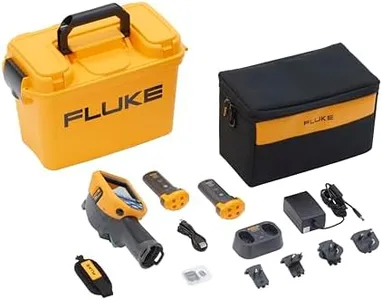
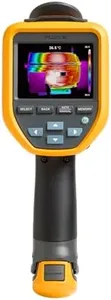
Fluke FLK-TIS60+ 30HZ, Thermal Imager; GT1; 30 HZ

The Fluke FLK-TIS60+ thermal imager is designed to offer a user-friendly experience with features like a touchscreen interface and fixed-focus point-and-shoot operation, making it easy to use even for beginners. It includes Fluke Connect, allowing you to manage and organize thermal data efficiently, which is great for professionals needing detailed reports or asset tracking. The patented IR-Fusion technology lets you blend infrared and visible light images, helping you see thermal details more clearly in context.

The camera runs on rechargeable lithium-ion batteries and includes voice annotation and IR Photo Notes to simplify documenting findings. A notable safety feature is its Class 2 laser, which is safe for everyday use. In terms of durability and ergonomics, the product size and weight are manageable. This camera is suitable for industrial technicians and maintenance professionals who want dependable thermal imaging with easy data management and clear visual reports.

For those seeking highly detailed technical specifications or advanced adjustable settings, it is advisable to verify those details before purchasing.

Buying Guide for the Best Thermal Image Cameras

Thermal imaging cameras are powerful tools that allow you to see heat signatures and temperature differences in various environments. They are used in a wide range of applications, from building inspections and electrical maintenance to wildlife observation and security. To choose the right thermal imaging camera for your needs, it's important to understand the key specifications and how they impact the camera's performance and suitability for your specific use case.
ResolutionResolution refers to the number of pixels in the thermal image. Higher resolution provides more detail and clarity, which is important for identifying small temperature differences and capturing detailed images. Resolutions can range from low (80x60 pixels) to high (640x480 pixels or more). If you need to detect small objects or require detailed images for analysis, opt for a higher resolution. For general use or larger objects, a lower resolution may suffice.
Temperature RangeThe temperature range indicates the minimum and maximum temperatures the camera can measure. This is crucial for ensuring the camera can handle the temperatures you expect to encounter. For example, if you're inspecting industrial equipment that operates at high temperatures, you'll need a camera with a higher maximum temperature range. Conversely, for building inspections or wildlife observation, a lower range may be adequate.
Sensitivity (NETD)Sensitivity, often expressed as NETD (Noise Equivalent Temperature Difference), measures the camera's ability to detect small temperature differences. A lower NETD value indicates higher sensitivity and better performance in detecting subtle temperature variations. If your work requires identifying minute temperature changes, such as in medical diagnostics or detailed inspections, choose a camera with a lower NETD value. For less critical applications, a higher NETD may be acceptable.
Field of View (FOV)Field of View (FOV) describes the extent of the observable area the camera can capture. A wider FOV allows you to see a larger area at once, which is useful for scanning large spaces quickly. However, a narrower FOV provides more detail in a smaller area. Consider your typical use case: for broad area surveillance or inspections, a wider FOV is beneficial. For detailed analysis of specific areas, a narrower FOV is preferable.
Frame RateFrame rate indicates how many frames per second (fps) the camera can capture. Higher frame rates provide smoother video and are important for capturing fast-moving objects or dynamic scenes. Common frame rates range from 9 fps to 60 fps. If you need to monitor moving subjects or require real-time analysis, opt for a higher frame rate. For static inspections or slower processes, a lower frame rate may be sufficient.
Display and ConnectivityThe display quality and connectivity options of a thermal imaging camera affect how you view and share the thermal images. A high-resolution display makes it easier to see details on the camera itself, while connectivity options like Wi-Fi, Bluetooth, or USB allow you to transfer images to other devices for further analysis. Consider how you plan to use and share the images: if you need to quickly share data with a team or analyze images on a computer, ensure the camera has the necessary connectivity features.
Durability and ErgonomicsDurability and ergonomics refer to the camera's build quality and how comfortable it is to use. A rugged, durable camera is essential for harsh environments, while a lightweight, ergonomic design is important for extended use. Think about where and how often you'll be using the camera: for frequent fieldwork or industrial settings, prioritize durability. For long inspection sessions, ensure the camera is comfortable to hold and operate.

FAQ